
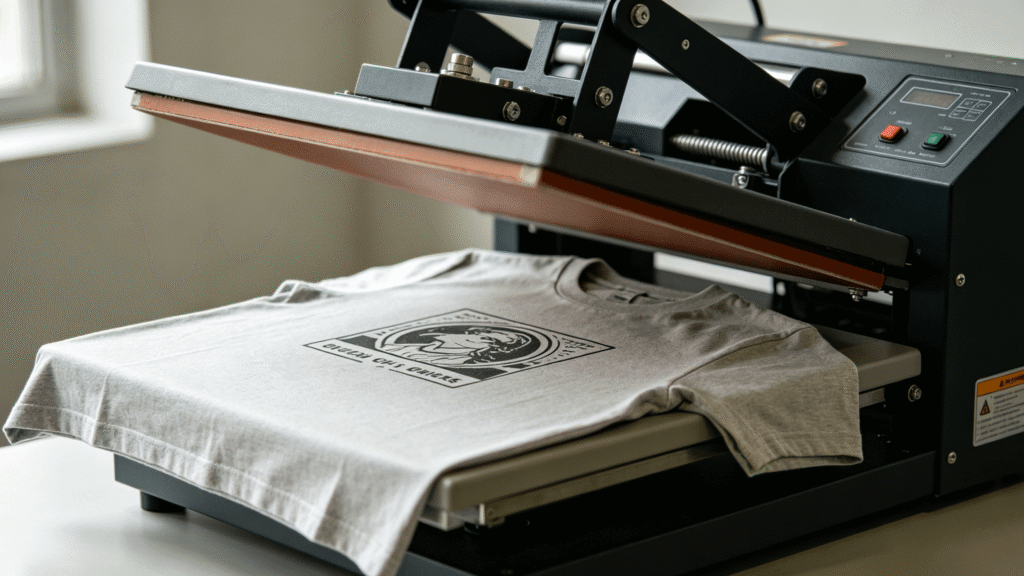
If you want shirts that look like they came from a high-end retail shop, you have to respect the “Golden Triangle”: temperature, pressure, and time. It’s not just about getting the plate hot; it’s a chemical reaction. If your temp is too low, the glue won’t melt. If the pressure is weak, the ink just sits on top of the fabric instead of sinking in. And if you rush the timer, that bond never actually happens.
In big B2B shops, you can’t just “feel” your way through a 500-shirt order. Cnding Group handles this with automated pneumatic systems that make sure every single garment hits those industrial durability standards without the guesswork.
The “blind calibration” and material check
You can’t just trust the screen on your heat transfer shirt press. Skipping “blind calibration”—checking what the machine is actually doing versus what the display says—is the fastest way to end up with peeling logos or ruined fabric.
1. Checking for temperature blind spots
Digital thermostats are notorious liars. They can be off by 10 to 30 degrees because of where the sensor is or how old the platen is.
- The fix: Use heat test strips or an infrared thermometer.
- Check at least five spots: the center and all four corners.
- Let the press warm up for a solid 10–15 minutes first.
- If the edges are 10 degrees colder than the middle, stay away from the sides during your run.